What Happened On Stage — And Why It Mattered
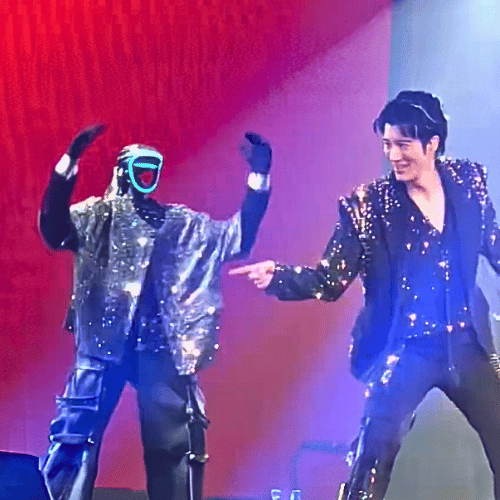
When Robots Dance meets pop star power: At a Chengdu concert on Thursday, Chinese-American singer Wang Leehom performed with six humanoid robots in silver sequins. They executed tight, music-synced choreography—from arm waves and leg kicks to turns, spins, jumps, and a finale of six Webster flips in unison.
- Song: “Open Fire.”
- Source of robots: Unitree Robotics (Hangzhou).
- Setup: robots danced alongside Wang (and, per one report, with human dancers).
“Six robots landed Webster flips together — timing was on point.”
If you’re here for pure spectacle, early reactions to Avatar: Fire and Ash chart how scale and emotion collide on a live-event level.
The Viral Moment — Musk’s One-Word Review
Clips of robots dancing raced across social media. On X, a post claimed robots in China are “doing it all… like pros,” noting Webster flips at Wang Leehom’s Chengdu show. Elon Musk retweeted and added a single word: “Impressive.”
- Reaction type: global amplification from tech circles.
- Takeaway: mainstream attention on humanoid performance agility
Elon Musk on X: “Impressive.” — in response to the concert robot video.
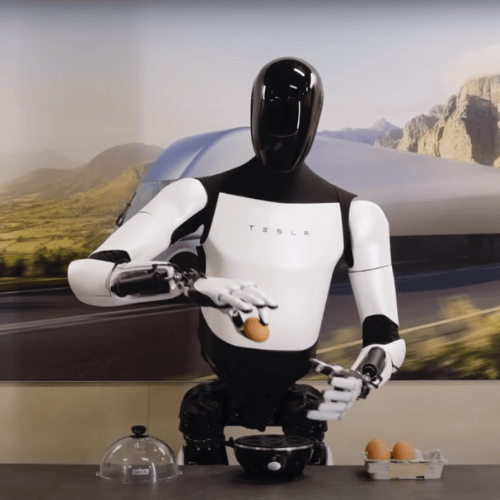
If Musk’s nod made you curious about real-world capability, see how Tesla’s Optimus handled everyday tasks in a recent demo.


Audience Reactions — From Awe To Double-Takes
Chinese platforms lit up. Viewers praised the polish and sync:
- Several viewers said the robots’ dance felt human-like.
- Contrast with Spring Festival Gala: then, robots spun handkerchiefs; now, they flip.
- General mood: surprise at how human-like the stage presence felt.
Craving the opposite of chrome-cool precision? This intimate, time-bending romance shows how human performances land emotional punches.
Who Built Them — And What’s New
The units came from Unitree Robotics. Coverage highlights:
- Unitree’s music-sync feature shows humanoid dance isn’t canned; it’s tempo-aware
- The company is exploring everyday dance use cases (e.g., home settings) with its G1 line.
- According to information cited from the manufacturer’s website, one model is positioned as a “Humanoid agent AI avatar” priced around USD 13,500, with dexterous hands, AI-accelerated robotics, and flexibility beyond ordinary human ranges.
For a different angle on China’s humanoids, Ant Group’s R1 shows how an AI robot pivots from spectacle to practical help.
Artist’s Note — A Rare Tech-Music Crossover
A statement on Wang Leehom’s official website called the moment a notable highlight of the Best Place Tour, framing it as a rare instance of “Robotic Dancer” use in a live concert and praising the seamless blend of technology and music. It added that the Chengdu audience responded with thunderous applause and shared the performance widely.
“A rare example of a Robotic Dancer in concert, blending advanced technology with powerful live music.” — Wang Leehom’s official site
And for a palate cleanser, step from future tech to deep time—this newly uncovered mammal skeleton reframes where our own agility began.
Why This Raises The Bar For Humanoids
- Precision: Complex, tempo-locked robot dance—not loops.
- Reliability: Six robots executed the same flip simultaneously.
- Show-readiness: Costumes, stage lights, live timing—and it worked.
- Public perception: Viewers now expect more than gimmicks; they want performance.
Signals For What’s Next
- Live entertainment: More artists will test robot dance ensembles.
- Consumer robotics: If pricing like ~$13,500 holds for some models, small venues and creators could experiment.
- Benchmarking: Expect friendly rivalry with projects like Tesla’s Optimus, as netizens already stirred a “robot Olympics” vibe.
- Home experiences: Music-aware motion could trickle into fitness, learning, and party use cases.