A New Era in PC and Server Power
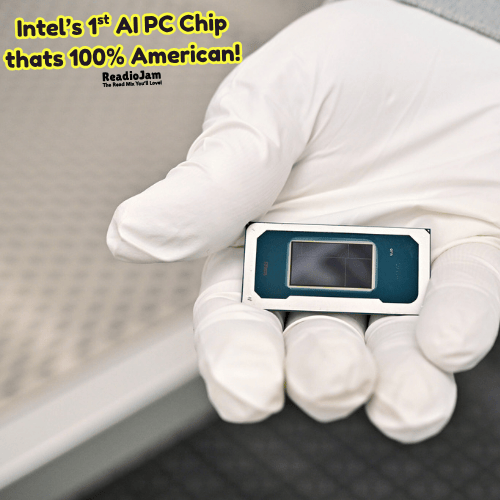
Intel has just pulled the curtains on its Panther Lake architecture, a next-generation platform powering the Intel® Core™ Ultra series 3—the company’s first consumer processor built on the Intel 18A node, its most advanced semiconductor process yet.
This isn’t just another chip release. It’s a major milestone for both Intel and the U.S. tech industry, signaling Intel’s re-emergence as a global semiconductor powerhouse and reaffirming its $100 billion+ commitment to domestic manufacturing.
While Intel’s 18A chip pushes AI into the PC mainstream, quantum computing may be about to leap forward too—with smartphone chip tech playing a surprising role
What Exactly Is Panther Lake?
Panther Lake is more than just a processor—it’s a scalable, AI-first SoC (system-on-chip) that brings together cutting-edge technologies across compute, graphics, AI, and power efficiency.
Key features include:
- Up to 16 new P-cores and E-cores, offering 50% faster CPU performance than the previous generation
- Next-gen Intel® Arc™ GPU with up to 12 Xe cores, delivering 50% better graphics performance
- Balanced XPU design with up to 180 Platform TOPS, enabling lightning-fast AI workloads
- Lunar Lake-level power efficiency with Arrow Lake-class performance
“We are entering an exciting new era of computing,” said Intel CEO Lip-Bu Tan. “Panther Lake and our 18A technology are driving a new wave of innovation.”
Even tools like Excel are getting the AI glow-up – though Microsoft has a surprising take on how it should (and shouldn’t) be used.




Built in the USA: Fab 52 Takes the Lead
All of this silicon magic is happening at Intel’s new Fab 52 in Chandler, Arizona—a crown jewel in the company’s vast semiconductor empire.
- Fab 52 is Intel’s fifth high-volume fab at the Ocotillo campus
- It’s part of a $100 billion investment to boost U.S. chip manufacturing
- Will power not just PCs, but also edge AI, robotics, and future data center products
The chip was developed in Oregon, produced at scale in Arizona, and supported by advanced packaging facilities in New Mexico—forming a coast-to-coast tech pipeline that underscores Intel’s U.S.-based innovation strategy.
Speaking of next-gen computing, a tiny Wi-Fi device is making waves by remotely rebooting PCs from thousands of miles away—and it’s real.
AI at the Core — Literally
What truly sets Panther Lake apart is its AI muscle. Designed to run modern workloads like never before, the chip is prepped for:
- Consumer and commercial AI PCs
- Gaming rigs and edge solutions
- Robotics with AI perception, thanks to Intel’s new Robotics AI software suite
Expect these chips to hit the market by January 2026, with first SKUs rolling out by end of 2025.
“Panther Lake is built to scale across form factors, price points, and industries.”
Of course, as AI becomes more embedded in our devices, understanding the risks—like AI hallucinations—is more important than ever.
The Server Side: Clearwater Forest Rising
Intel didn’t stop with PCs. It also gave a sneak peek into Clearwater Forest—its next-gen Intel® Xeon® 6+ server processor built on the same 18A process.
Designed for hyperscale, cloud, and telecom providers, Clearwater Forest brings:
- Up to 288 E-cores
- 17% improvement in IPC (Instructions Per Cycle)
- Massive boosts in efficiency, density, and throughput
Expected launch: First half of 2026.
AI isn’t just changing chips—it’s transforming entire industries. Real estate, for example, is seeing quiet but powerful disruption from AI behind the scenes.
18A Node: The Backbone of Innovation
At the heart of both platforms is Intel 18A, a 2nm-class node developed in the U.S., with performance and efficiency leaps that rival any global competitor.
Highlights:
- 15% performance-per-watt boost vs. Intel 3
- 30% higher chip density
- RibbonFET: New transistor design for smarter switching
- PowerVia: Backside power delivery that optimizes power flow
- Foveros: Advanced 3D stacking for chiplet-based flexibility
Intel 18A will form the foundation for at least three future chip generations across PC and server lines.
Meanwhile, on the interface side, AI-generated voices have taken a startling leap in realism—thanks to a breakthrough from OpenAI.
Why This Matters for America
Intel’s Panther Lake isn’t just a win for tech enthusiasts—it’s a strategic play for U.S. semiconductor independence. By building the most advanced chips on American soil, Intel is:
- Reducing reliance on overseas fabs
- Creating a more resilient supply chain
- Supporting national security and economic stability
- Fueling next-gen AI innovation from consumer to cloud
As the AI PC era takes shape, Panther Lake is leading the charge—made in America, made for the future.